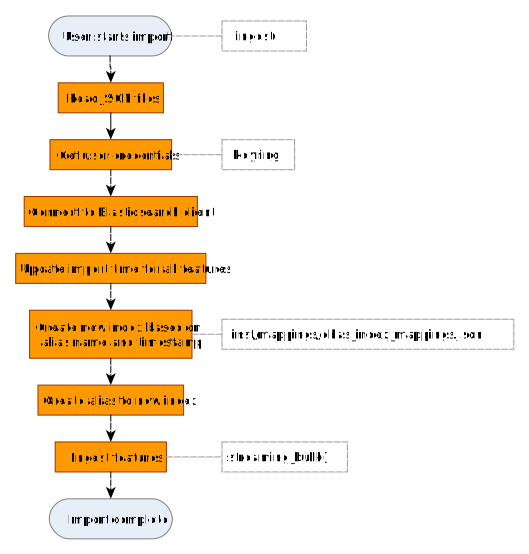
Introduction
Measurement files are processed using the library screening algorithm
known as DBAS. All the parameters for processing, as well as the
location of the necessary input files, are stored in the
msrawfiles index. The output is stored in a
dbas index. See naming conventions of
indices.
Reprocessing all datafiles in msrawfiles index
After additions have been made to the spectral library all datafiles
must be reprocessed. After making necessary changes to the
msrawfiles table, processing can be started with the
various dbaScreening* functions depending on where the
processing should take place (locally, server etc.). For example,
dbaScreeningSelectedBatchesSlurm() is used to begin
processing using the SLURM workload manager.
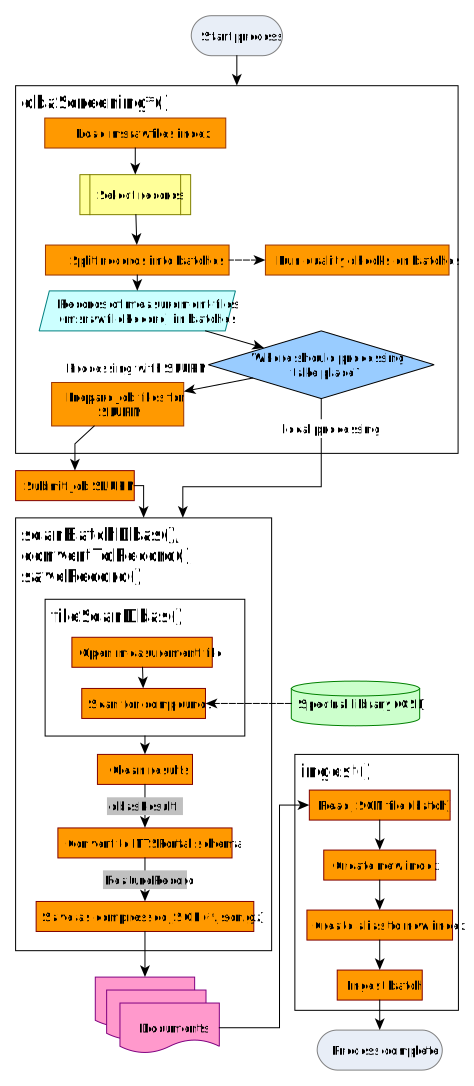
Overview of processing algorithm
Connecting to ElasticSearch cluster
Connection within the BfG is achieved in R using
connectNtsportal(). This will use the stored credentials to
build the connection (the PythonDbComm interface).
General workflow
The HRMS measurement files are stored as mzXML files in the
filesystem, in directories representing batches (measurement sequences).
The files were previously converted from the vendor specific formats
(.raw, .wiff, etc.) using Proteowizard’s
msconvert-tool.
The msrawfiles table is used to manage the metadata.
Each measurement file has a record in this table which contains
information such as file’s path, sampling and acquisition information
and processing parameters.
The msrawfile-records are used to control the processing
workflow. Once the workflow is complete, the data is saved as a JSON
file in the format needed for Elasticsearch ingest (importing the data
into Elasticsearch). The ingest itself is done in a separate step.
Process launching
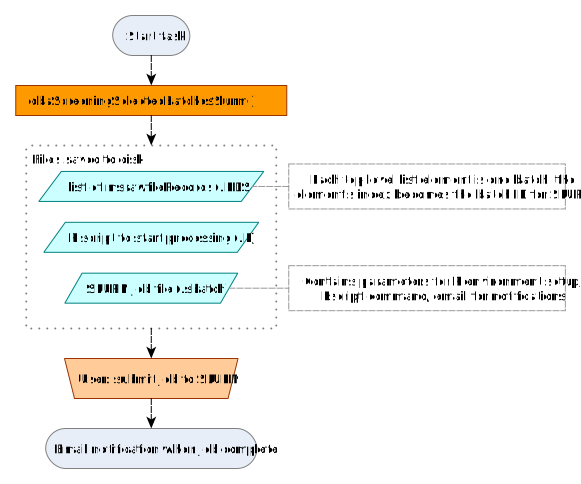
The user runs one of several dbaScreening* functions to
start the processing either locally or via SLURM. In
dbaScreeningSelectedBatchesSlurm() (the most commonly used)
specific directories (i.e. batches) containing the measurement files are
passed either by listing them directly or by giving a root directory.
Alternatively, the user can process any “new” batches using
dbaScreeningUnprocessedBatchesSlurm() (Section Collecting msrawfile
records).
Collecting msrawfile records
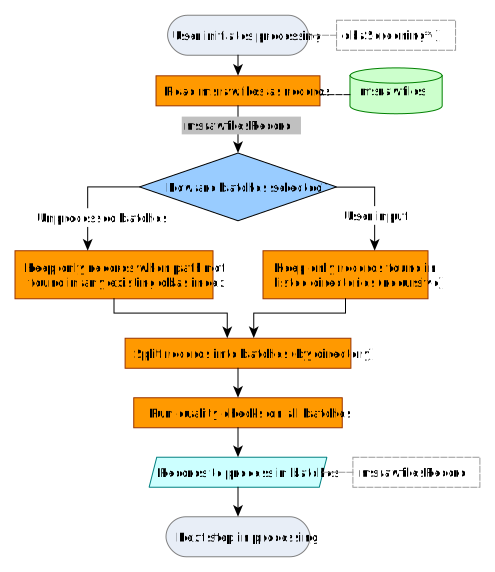
In dbaScreeningUnprocessedBatchesSlurm(), new batches
are selected by looking at all dbas indices and comparing
the files found (identified by the path field) to the files
found in msrawfiles. Any batches in msrawfiles
not yet found in any dbas index are selected for
processing.
The msrawfiles records are loaded and checks performed
before the scanning process begins. Output is a list of batches of
ntsportal::msrawfilesRecords.
File-wise scanning
The measurement files are scanned for compounds in the spectral
library and the results are cleaned. The result is one
dbasResult object for the batch (list of
data.frames containing peak information for the whole
batch).
| Name of table | Comment |
|---|---|
peakList |
Peaks detected with MS2 |
reintegrationResults |
Peaks detected after gap-filling (with and without MS2) |
rawFilePaths |
|
ms1Table |
MS spectra |
ms2Table |
MS2 spectra |
eicTable |
Extracted ion chromatograms |
isResults |
Internal standard peaks |
Conversion to featureRecord
The results from scanning (dbasResult) are converted to
a list format for later import into NTSportal
(featureRecord). Additional compound information is taken
from the spectral library and measurement file metadata is taken from
msrawfiles and added to each record. MS1,
MS2 spectra and the EIC of the peak are added if available
(only peaks in dbasResult$peakList have these data
available).
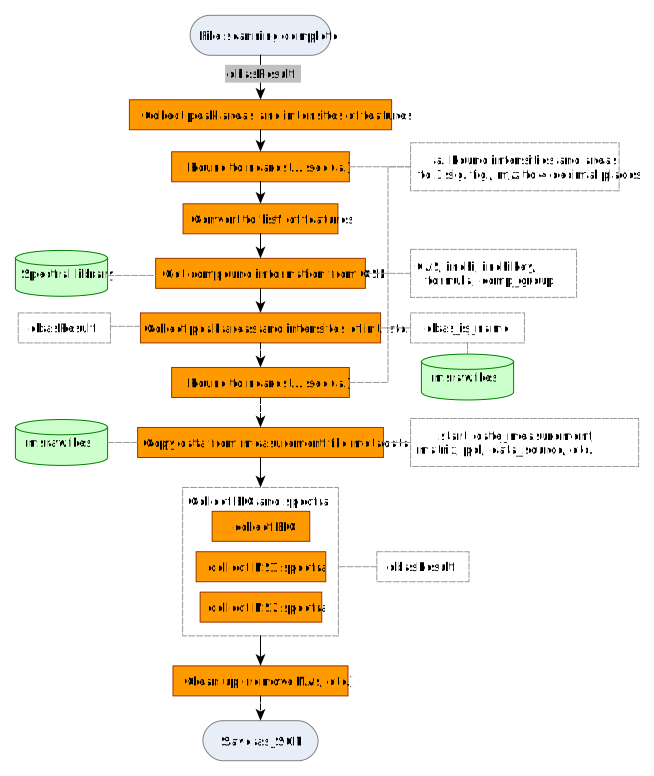
dbasResult
to a featureRecord